Every week we get calls from Denver homeowners asking the same question: do I need to repair this, or replace the whole thing? The honest answer depends on more than the roof — your timeline, your insurance situation, and your goals all matter. Here's how we think through it on every job.
The Quick Decision Framework
Before diving into specifics, here's the framework we use on every inspection:
- Roof under 10 years old + isolated damage → Repair, almost always
- Roof 10–15 years + moderate damage → It depends — see below
- Roof 15+ years + any meaningful damage → Replacement is usually the better long-term value
- Roof of any age + insurance-covered storm damage → Almost always full replacement
8 Signs You Need a Full Replacement
1. The roof is 20+ years old.
Most asphalt shingle roofs in Colorado last 15–25 years depending on quality, slope, and exposure. If you're past year 20, you're on borrowed time. Pouring money into repairs on an old roof is rarely cost-effective.
2. Granules are everywhere in your gutters.
Shingles use mineral granules embedded in the asphalt as their UV and weather protection. When granules wash off in large quantities, the asphalt is exposed and the shingles enter rapid failure. Some granule loss is normal; piles of granules in gutters mean the roof is at end of life.
3. Shingles are curling, cupping, or cracking.
These are signs of UV degradation and thermal cycling. Once shingles start curling at the edges or cupping in the center, they're no longer sealing properly — and replacement is overdue.
4. Multiple leaks in different locations.
A single leak around a chimney or skylight is usually a flashing issue — repairable. But leaks in multiple unrelated areas mean the roof itself is failing as a system. Patching here and there is a losing game.
5. Sagging deck or visible structural issues.
If you can see waves, dips, or sagging in the roof surface from the ground, you may have rotted decking, structural damage, or water-saturated insulation underneath. Time to replace and inspect the deck.
6. Sunlight visible through the attic.
Go up to your attic on a sunny day with the lights off. If you see any daylight coming through the roof, you have penetrations and water intrusion paths. This isn't a "patch and move on" situation.
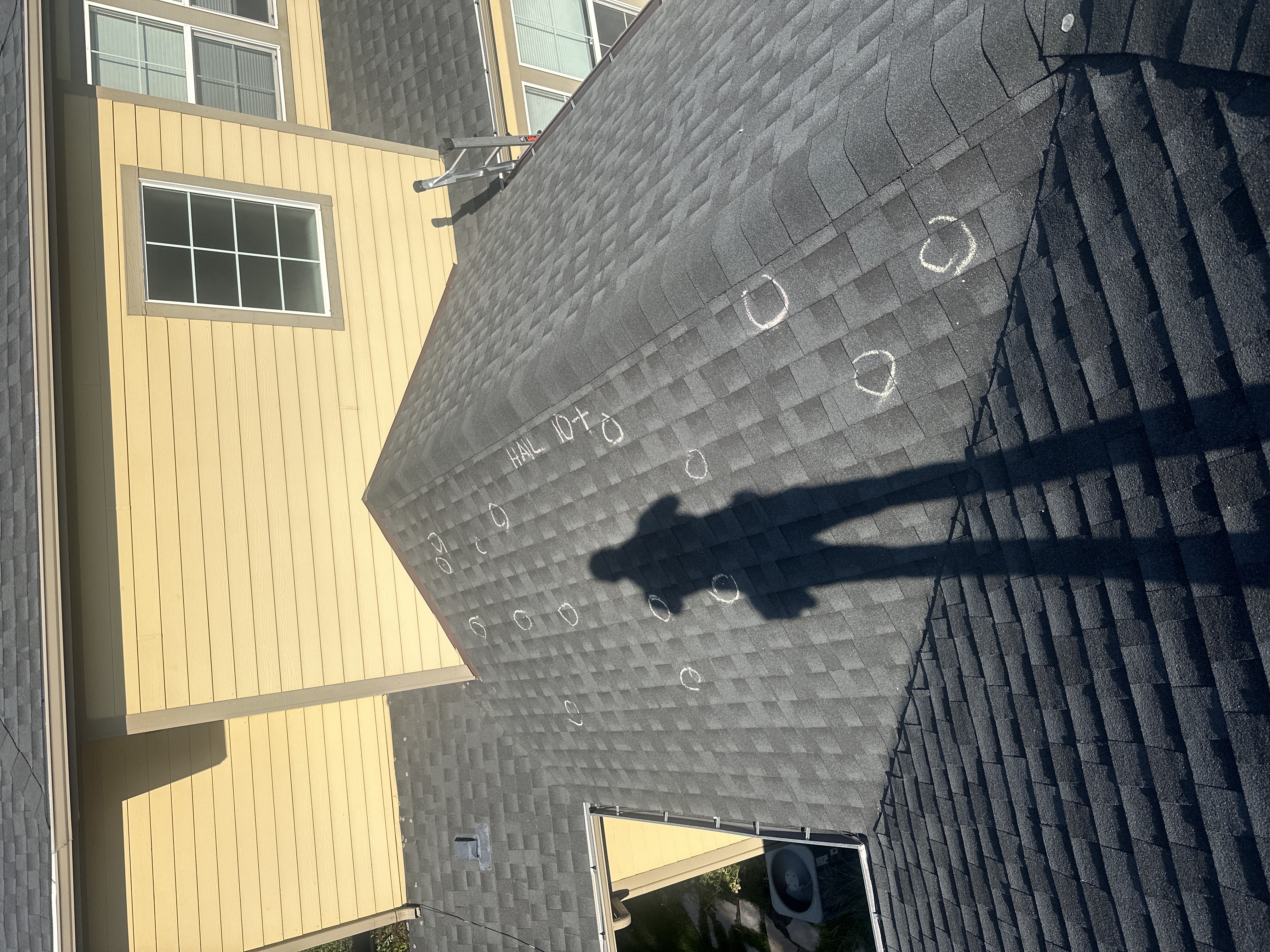
7. Confirmed hail damage with insurance approval.
In Colorado, this is by far the most common path to replacement. If your insurance carrier has approved a full replacement after a hail event, that's the right call — both financially and for your roof's long-term performance.
8. You're selling within 1–3 years.
A new roof is one of the top selling features in any Colorado real estate transaction. Buyers in markets like Denver, Castle Rock, and Centennial routinely require a roof certification or new roof as a condition of sale. Replacing before listing usually pays for itself.
When Repair Is the Right Call
- Roof is under 10 years old with localized damage
- A single flashing failure around a chimney, skylight, or vent
- Damage from a falling tree branch or specific impact event affecting only one area
- Cosmetic issues (a few missing or damaged shingles) on an otherwise healthy roof
- You're budget-constrained and need to extend the roof's life by a few years
We turn down a meaningful percentage of replacement jobs every year because the roof simply doesn't need it. A good roofer should tell you the truth — even when the truth is "you don't need what you came here asking for."
The Hidden Cost of Repeated Repairs
Here's a math problem we see all the time: a homeowner pays $1,200 for a repair, then $1,800 for another the next year, then $2,500 the year after that. Three years and $5,500 later, the roof still needs replacement.
On an aging roof, repairs are often a delay tactic — not a solution. If you're facing your second or third repair in a few years, it's time to seriously evaluate replacement.
How We Help You Decide
Every Force 5 inspection includes a full photo report and an honest recommendation — repair vs replacement vs "you're fine for a few more years." We don't push you toward whichever option pays us more. We tell you what we'd tell our own parents.