Most homeowners think about their roof exactly twice: when it leaks, and when it's time to replace. That's a costly approach in Colorado, where catching small issues early can save thousands. Here's how often you should actually inspect your roof — and the storm events that should trigger an immediate look.
The Baseline: Twice a Year
For most Colorado homes, we recommend professional roof inspections twice a year — once in spring (after hail season) and once in fall (before winter). This catches storm damage while there's still time to file insurance claims, and catches winter prep issues before snow starts piling up.
- Spring inspection (April–May): Document any winter or early hail damage; identify items needing repair before summer storm season hits in earnest
- Fall inspection (September–October): Pre-winter assessment — flashing, valleys, sealant, attic ventilation, and any heat cable systems for mountain homes
After Any Significant Storm
In addition to scheduled inspections, get a professional look at your roof after any storm event that meets these criteria:
Hail of any meaningful size
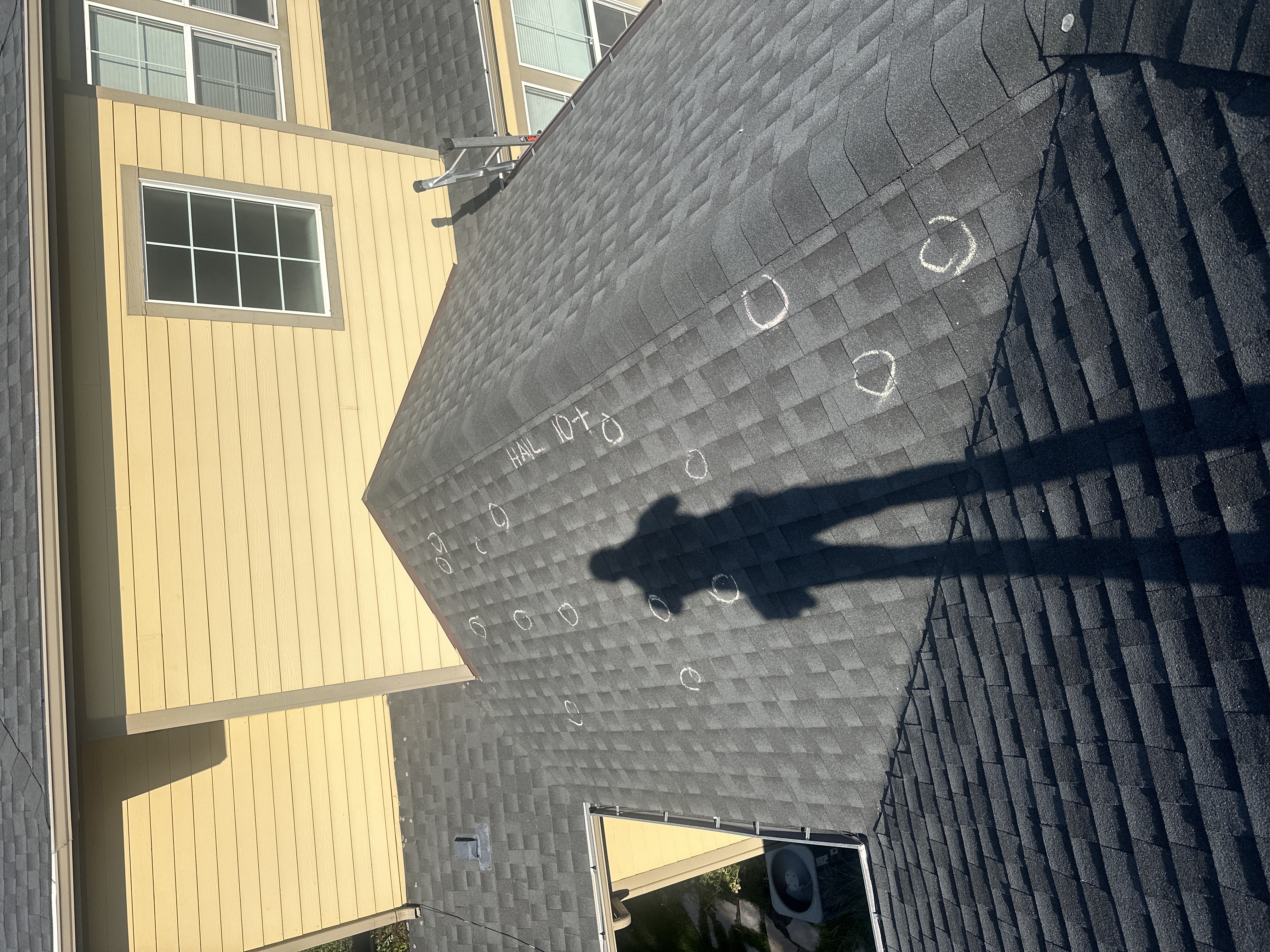
If hail in your area was reported as 1 inch or larger, schedule a free inspection — even if your roof looks fine from the ground. Hail damage is rarely visible from below; it shows up as bruised shingles, fractured mat, and granule loss that only a roof-level inspection will find.
Wind events of 60+ mph
Sustained high winds can lift shingle tabs, break seals, damage flashing, and tear off ridge caps. Front Range chinook winds and Denver's spring "wind events" frequently exceed this threshold.
Heavy snow followed by warming
In Summit County and the foothills, the freeze-melt-refreeze pattern that creates ice dams can cause damage in days. If you've had a major snow event followed by warming, an inspection is worth the call — especially if you don't have heat cable installed.
Falling trees or branches
Any time something falls on your roof, get it inspected — even if it looks OK. Impact damage to decking can be hidden under intact shingles, and minor flashing damage can become major leaks months later.
Colorado law generally gives you 1 year from the date of loss to file storm damage claims. If you wait too long after a hailstorm to inspect, you may lose your right to file — even if the damage is real and severe.
Annual Inspections If You're Risk-Tolerant
If twice a year feels like too much, a single annual inspection — done in early fall before the snow starts — is the minimum we recommend for any Colorado home. Skip a year, and you may miss damage that becomes a much bigger problem by the next spring.
Inspections on Older Roofs
For roofs over 15 years old, we recommend twice-yearly inspections as a hard rule. At that age, individual components are starting to fail and small issues can rapidly become major ones. Catching a failed pipe boot in October is a $250 repair; finding the water damage from the same failed pipe boot in March is a $3,000 ceiling repair.
What a Real Inspection Includes
A professional roof inspection is more than glancing at shingles from the driveway. At Force 5, every inspection covers:
- Full walk of all accessible roof surfaces
- Photo documentation of any areas of concern
- Flashing condition at chimneys, skylights, vents, and walls
- Sealant and caulking condition
- Granule loss assessment (in gutters and on roof)
- Ridge cap and hip line inspection
- Attic ventilation check
- Soffit, fascia, and eave condition
- Gutter attachment and flow
- Snow guard / heat cable condition (mountain homes)
You receive a written report with photos and a clear summary: what we found, what (if anything) needs attention, and what we recommend.
The Cost
A reputable Colorado roofer should inspect your roof for free. We do. Most others do too. If a contractor wants to charge for a routine inspection, that's a red flag — they're likely not pricing the inspection so much as pricing your time after they push you toward unnecessary work.
Free, no-obligation roof inspections across Denver Metro and Summit County. Whether or not you end up working with us, you get an honest written report with photos.